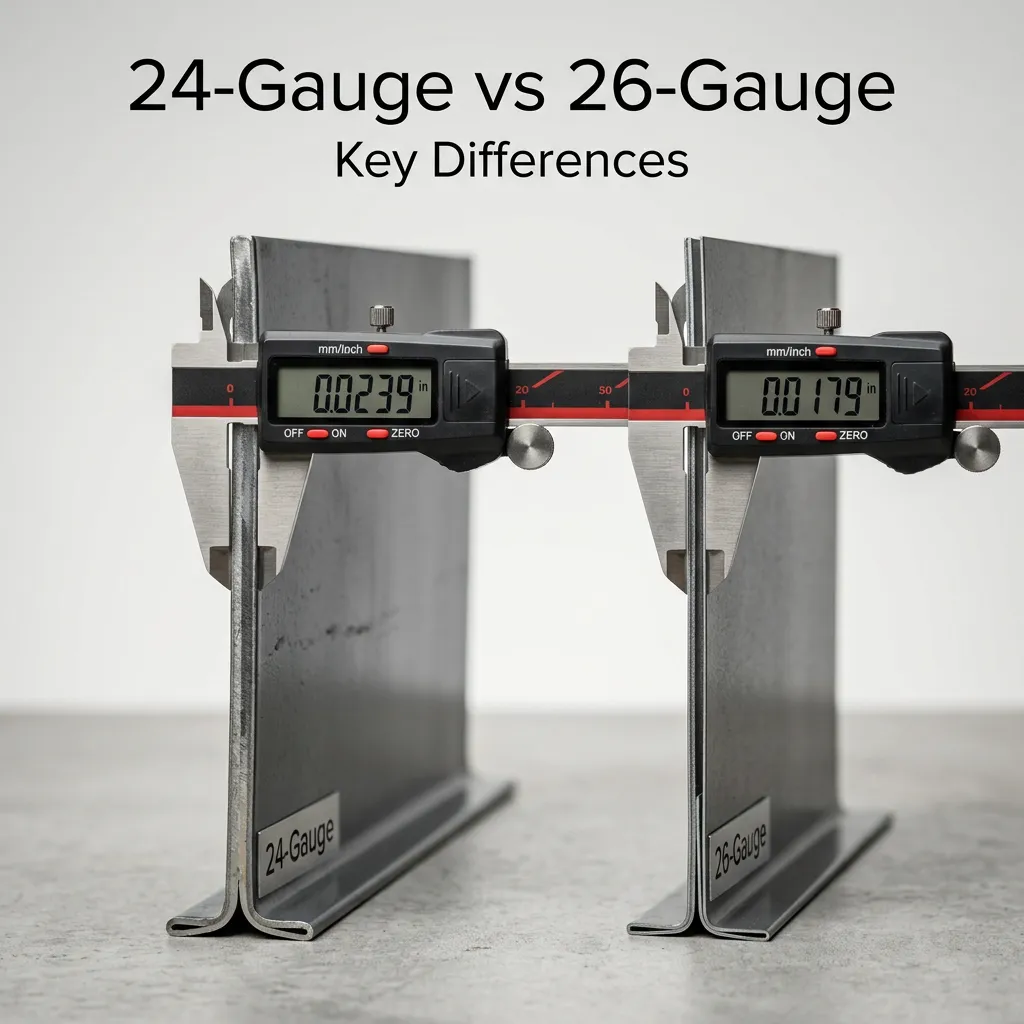
24-Gauge vs. 26-Gauge Metal Roofing: Key Differences
What Is the Difference Between 24-Gauge and 26-Gauge Metal Roofing?
When choosing a metal roof, the panel's thickness is one of the specifications worth understanding. You may come across 24-gauge and 26-gauge steel while comparing roofing estimates, and the difference can affect material cost, panel rigidity, handling, and the requirements of the roofing system.
The main distinction is straightforward: 24-gauge steel is thicker than 26-gauge steel. Thicker steel generally provides greater resistance to denting and deformation when other material and design characteristics are comparable. However, the thickness alone does not determine how well a roof will perform.
For homeowners planning a roof replacement, the choice between 24-gauge and 26-gauge metal roofing should take into account the panel profile, roof design, local weather exposure, fastening system, and manufacturer's specifications.
Reliable Metal Roofing specializes in standing seam metal roofing throughout Central Pennsylvania and the Susquehanna Valley. Understanding the differences between metal gauges can help you ask better questions and choose a roofing system that fits your property and long-term needs.
What Does Metal Roofing Gauge Mean?
Metal gauge is a numbering system used to describe the thickness of sheet metal. For common steel sheet gauges, a lower number indicates thicker material.
That means 24-gauge steel is thicker than 26-gauge steel, even though the number is smaller.
As a general reference, nominal steel thicknesses are approximately:
24 gauge: 0.024 inch
26 gauge: 0.018 to 0.019 inch
These figures are approximate. Actual thickness depends on the applicable gauge standard and whether the stated measurement refers to the base steel or includes metallic coatings. Always check the manufacturer's published specifications when comparing products.
Although the difference may look small on paper, it can influence how a panel behaves during handling, installation, and service.
It is also important to distinguish steel thickness from the thickness of the complete roofing assembly. Underlayment, clips, fasteners, roof decking, and other components contribute to the performance of the finished system.
24-Gauge vs. 26-Gauge Metal Roofing: Key Differences
Both gauges can be used in metal roofing systems designed for their respective specifications. The right option depends on the project rather than a universal rule that one gauge is always best.
1. Thickness and Panel Rigidity
The most direct difference between 24-gauge and 26-gauge steel is thickness.
Because 24-gauge steel is thicker, it generally provides greater panel rigidity when comparing otherwise similar products. This can be helpful when handling panels and when a project calls for a stiffer roofing material.
A 26-gauge panel is thinner and may be easier to handle in some applications. However, its performance depends on the panel's shape, rib design, support spacing, steel grade, and installation method.
For standing seam roofing, the profile and seam design also contribute to the overall stiffness of the panel. This is why gauge should never be evaluated in isolation.
2. Durability and Resistance to Dents
A thicker steel panel will generally offer better resistance to denting and deformation than a thinner panel of otherwise comparable construction.
This can make 24-gauge steel an attractive option for homeowners who prioritize material thickness and rigidity.
However, dent resistance also depends on the impact's force and location, panel profile, steel strength, and the type of object involved. Neither gauge is immune to damage from severe hail, falling branches, or other impacts.
Protective coatings and finishes also matter because they help protect the metal from environmental exposure. A thicker panel does not automatically have a better corrosion-resistant coating.
When comparing roofing systems, review the manufacturer's impact-resistance information and warranty terms rather than relying on gauge alone.
3. Cost of 24-Gauge vs. 26-Gauge Metal Roofing
Material thickness can influence roofing cost. Since 24-gauge steel uses more material than 26-gauge steel for the same surface area, it will generally cost more when other specifications are comparable.
However, the total project price depends on more than the metal itself.
Factors that can affect the final estimate include:
Roof size and pitch
Panel profile and finish
Roof complexity
Underlayment and flashing
Clips and fastening components
Removal of existing roofing
Labor and installation requirements
Access and safety considerations
A 26-gauge system may offer a lower initial material cost in some cases, while a 24-gauge system may better meet the project's requirements for thickness and rigidity.
The best comparison is between complete roofing proposals with clearly defined materials, installation details, and warranties.
4. Performance in Pennsylvania Weather
Homeowners in Central Pennsylvania need to consider rain, snow, temperature changes, wind, and seasonal weather exposure when choosing a roofing system.
Both 24-gauge and 26-gauge steel may be suitable for residential roofing when used in a system designed and installed for the specific application.
Thicker steel may offer an advantage in panel rigidity, but gauge alone does not determine wind resistance, snow performance, or resistance to water intrusion.
These characteristics also depend on factors such as:
Panel profile and seam design
Roof pitch and structural support
Clip spacing and attachment method
Wind-uplift ratings
Flashing and underlayment
Installation quality
Applicable building requirements
For properties exposed to challenging weather conditions, ask your roofing contractor to recommend a system based on the building and the manufacturer's engineering specifications.
5. Installation and Handling
The thickness of the steel can affect how panels are handled and formed during installation.
Thicker panels may require equipment and installation methods suited to their specifications. The panel's length, profile, finish, and fastening system also influence how the material should be handled.
For standing seam roofing, correct seam formation, panel alignment, clips, flashing, and allowance for thermal movement are especially important.
Reliable Metal Roofing forms its Everseam standing seam panels on-site. This approach allows panels to be prepared for the project and helps reduce the handling and transportation of long panels.
Learn more about the company's metal roofing details and specifications to understand its panel systems and installation features.
Is 24-Gauge Metal Roofing Better Than 26-Gauge?
For homeowners comparing otherwise similar steel roofing products, 24-gauge steel generally offers greater thickness and rigidity. That can make it a worthwhile choice when those characteristics are important to the project.
However, 26-gauge steel should not automatically be considered an inferior roofing material. It can be suitable for applications where the selected panel system meets the building's design, performance, and installation requirements.
Here is a simple comparison:
Feature | 24-Gauge Steel | 26-Gauge Steel |
|---|---|---|
Thickness | Thicker | Thinner |
Panel rigidity | Generally greater for comparable products | Generally lower for comparable products |
Dent resistance | Generally better under comparable conditions | May be more susceptible to denting |
Material cost | Generally higher | Generally lower |
Handling | Depends on panel profile and equipment | Depends on panel profile and equipment |
Weather performance | Depends on the complete roofing system | Depends on the complete roofing system |
Best choice | Projects prioritizing greater thickness and rigidity | Projects where the specified system meets performance needs and budget |
The table provides a general comparison, not a guarantee of how every roofing product will perform. Manufacturers may use different steel grades, coatings, and panel profiles, so compare the specifications of the actual products under consideration.
Which Metal Gauge Is Right for Your Home?
Choosing the right gauge starts with understanding your roof, budget, and priorities.
When 24-Gauge Metal Roofing May Be Worth Considering
You may want to consider 24-gauge steel if:
You prefer thicker steel panels.
Panel rigidity is an important consideration.
You are investing in a specialized standing seam roofing system.
You want to compare higher-specification metal panels for your home's requirements.
The manufacturer's specifications support the performance you need.
The additional material cost may be worthwhile when it aligns with the intended application and the roofing system's overall value.
When 26-Gauge Metal Roofing May Be Suitable
A 26-gauge system may be worth considering if:
The selected panel is approved for your intended application.
The roof design and support requirements are compatible with the product.
You are comparing roofing systems with different upfront costs.
The manufacturer's performance specifications meet your needs.
The complete system provides suitable warranty coverage and installation guidance.
The decision should be based on the product's engineering and installation requirements, not simply on which gauge is cheaper.
What Metal Gauge Does Reliable Metal Roofing Offer?
When researching 24-gauge vs. 26-gauge metal roofing, it helps to understand the specifications of the products your contractor actually installs.
Reliable Metal Roofing offers its Everseam standing seam system made from 24-gauge steel. The company also lists Everlast II metal panels in 27-, 28-, and 29-gauge options.
These are different products with their own panel profiles and applications. The company's published specifications do not list a 26-gauge option among these offerings, so homeowners should confirm product availability directly if they specifically want 26-gauge roofing.
The Everseam system uses concealed metal clips and is formed on-site. These features are relevant when comparing a complete standing seam system rather than evaluating steel thickness alone.
Visit the Reliable Metal Roofing details and specifications page to review the available systems and discuss which option may be suitable for your property.
Other Factors to Consider Before Choosing a Metal Roof
Gauge is only one part of a roofing decision. Before approving an estimate, review the other specifications that influence the roof's appearance, installation, and performance.
Panel Profile
Different panel profiles have different seam heights, rib patterns, and structural characteristics. The profile should suit the roof design and the manufacturer's requirements.
Protective Coating and Finish
The coating system affects the metal's protection against environmental exposure and contributes to its appearance. Ask about the coating specifications and applicable finish warranty.
Fastening System
Standing seam systems commonly use concealed clips, while many traditional metal panel systems use exposed fasteners. Each system has its own installation and maintenance requirements.
Flashing and Underlayment
A durable metal panel cannot compensate for poorly installed flashing or an unsuitable underlayment. Roof valleys, chimneys, skylights, vents, and wall transitions need appropriate detailing.
Color and Appearance
The right color can complement your home's siding, trim, and architectural style. Review available finishes before selecting a roofing system.
You can explore the company's metal roofing colors to help narrow down the options for your project.
Get Professional Advice Before Choosing Your Metal Roofing Gauge
If you are replacing your roof, ask your contractor to explain why a particular gauge and panel system is recommended for your home.
A professional assessment should consider the roof's dimensions, pitch, structural support, existing materials, weather exposure, and installation details. It should also identify the specific panel product, metal thickness, coating, underlayment, flashing, and warranty included in the proposal.
Reliable Metal Roofing serves homeowners and contractors throughout Central Pennsylvania and the Susquehanna Valley, specializing in standing seam metal roofing.
If you are considering a metal roof, explore our residential metal roofing services to learn more about the available options.
You can also contact Reliable Metal Roofing to discuss your project and request a free in-person estimate.
Frequently Asked Questions About 24-Gauge and 26-Gauge Metal Roofing
1. Is 24-gauge metal roofing thicker than 26-gauge?
Yes. For common steel sheet gauges, 24-gauge steel is thicker than 26-gauge steel. The exact thickness depends on the applicable gauge standard and the manufacturer's specifications.
2. Is 24-gauge metal roofing more durable than 26-gauge?
For otherwise comparable steel panels, 24-gauge material generally offers greater rigidity and resistance to denting. However, overall durability also depends on steel grade, panel profile, coating, installation quality, and environmental conditions.
3. Is 26-gauge metal roofing good for residential homes?
It can be suitable for residential roofing when the selected product is designed for the application and meets the roof's structural and performance requirements. Always check the manufacturer's specifications and installation guidelines.
4. Does 24-gauge metal roofing cost more than 26-gauge?
Generally, yes, when comparing otherwise similar products. Thicker steel uses more material, which can increase the panel cost. The total installed price also depends on roof complexity, labor, accessories, and other project requirements.
5. Which metal gauge is better for Pennsylvania weather?
Neither gauge is automatically better in every situation. Thicker steel generally provides greater panel rigidity, but weather performance depends on the complete roofing system, including panel design, attachment method, flashing, underlayment, and installation quality.
6. Does a thicker metal roof last longer?
Not necessarily. Thickness is one factor in roof performance, but service life also depends on protective coatings, corrosion resistance, installation quality, weather exposure, maintenance, and warranty conditions.
7. What gauge metal does Reliable Metal Roofing offer?
Reliable Metal Roofing lists its Everseam standing seam panels in 24-gauge steel and its Everlast II panels in 27-, 28-, and 29-gauge options. Contact the company to confirm current product availability and discuss which system is appropriate for your project.
8. How do I choose the right metal roofing system for my home?
Start by comparing panel specifications, gauge, profile, coating, fastening system, installation requirements, and warranty. A qualified roofing contractor can inspect your property and recommend a system based on your roof design, budget, and performance needs.
Final Thoughts
The difference between 24-gauge and 26-gauge metal roofing comes down primarily to thickness, with 24-gauge steel generally providing greater rigidity and resistance to denting under comparable conditions. A 26-gauge option may still be suitable when the product specifications meet the project's requirements.
Before making a decision, look beyond the gauge number. Panel design, protective coatings, fastening systems, installation quality, and warranty coverage all contribute to the performance of a metal roof.
For homeowners in Central Pennsylvania and the Susquehanna Valley, Reliable Metal Roofing can help you compare its available metal roofing systems and determine which option fits your property.
Visit our website or contact our team for a free estimate to discuss your roofing project.
