When Roofs Were Built to Outlast Generations
When Roofs Were Built to Outlast Generations
We recently worked with a service business owner who chose a low-cost CRM in year one. The platform couldn't integrate with their billing or communication tools, but it was cheap and got them running quickly.
Within twelve months, the cracks showed up.
Staff spent hours manually transferring information between systems. Appointments got missed. Invoices went out late. Billing errors created customer friction. The owner realized the "savings" were costing them more in lost time and damaged relationships than a better system would have cost upfront.
The transition to something scalable required retraining employees, migrating data, and dealing with operational disruptions.
This pattern shows up everywhere in business. And it shows up in construction data too.
The Longevity Gap Nobody Talks About

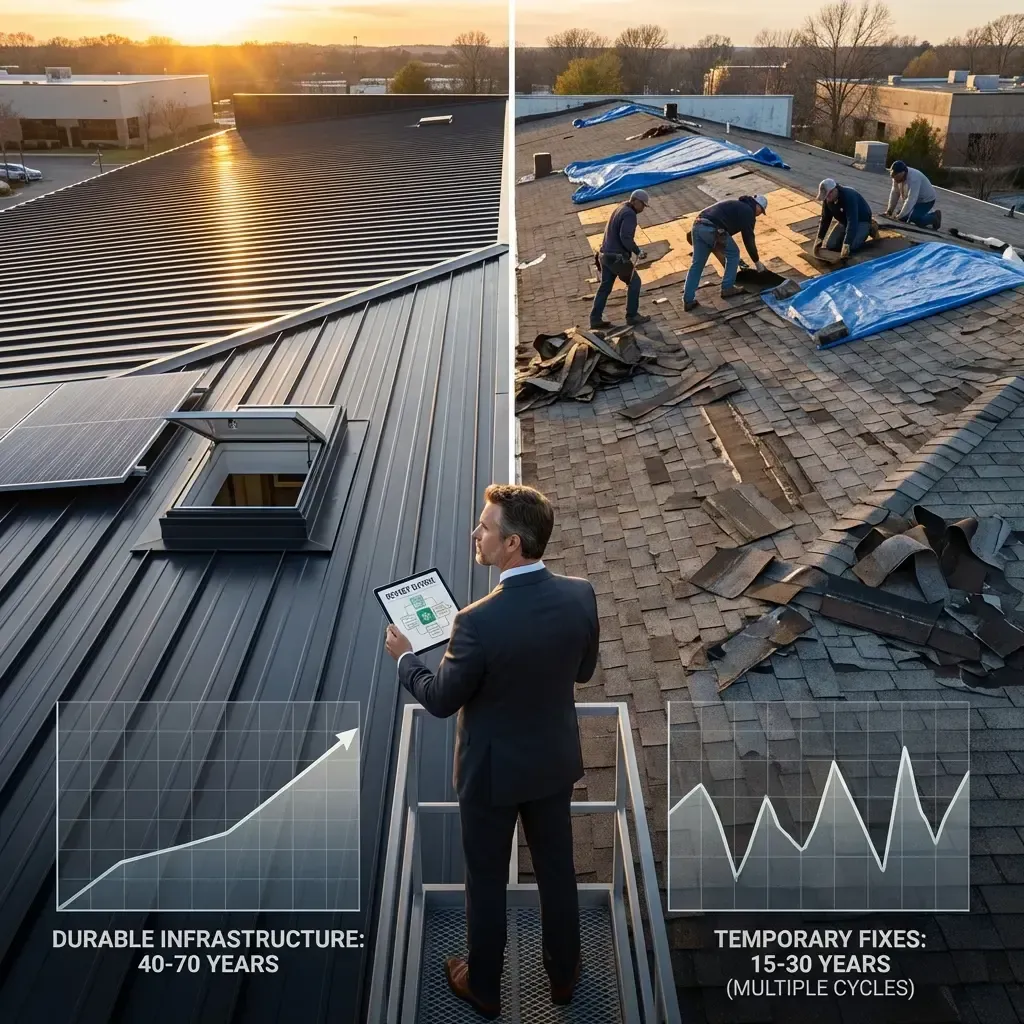
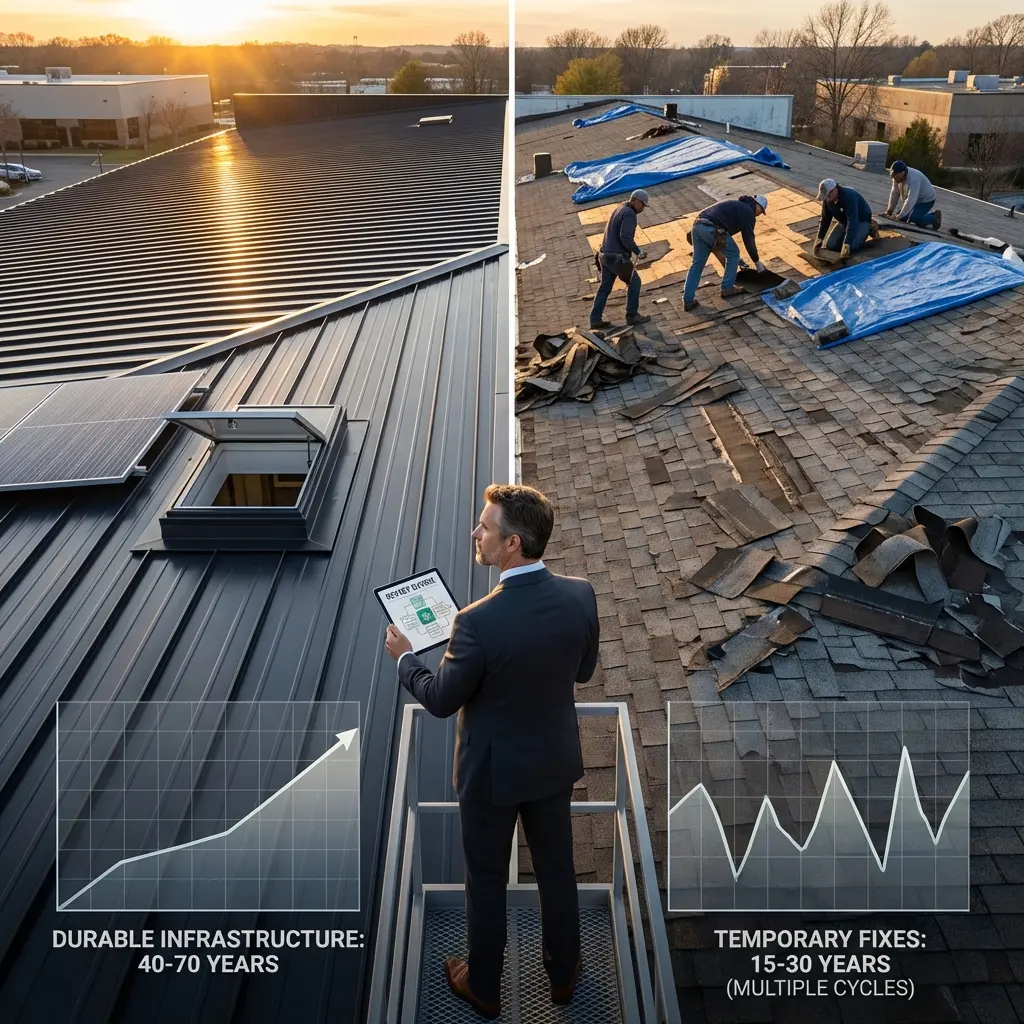
Standing seam metal roofs last 40-70 years. Traditional asphalt shingles last 15-30 years.
That means you'll face 2-3 shingle replacements during the lifespan of one metal roof.
Each replacement cycle requires coordinating contractors, allocating budget, and dealing with operational interruptions while the work gets completed. Just like that entrepreneur's CRM problem, the initial savings get offset by repeated interventions that consume time and resources.
Those interventions become more disruptive as the building or business becomes more complex.
A detailed 45-year cost analysis reveals asphalt shingles accumulate approximately $57,000 in total costs including replacements, maintenance, and elevated energy expenses. A metal roof costs roughly $23,000 over the same period.
The "cheap" choice compounds into expensive problems over time.
Engineering That Honors Old World Attention to Detail

When every dollar feels critical in the early stages, you need to reframe the upfront difference. It's not a purchase decision. It's a timing decision about when you want to pay for stability.
A metal roof costs 2-3 times more upfront than shingles but lasts 3-4 times longer with virtually no maintenance. You're not just buying better materials. You're avoiding multiple replacement cycles that would otherwise require future capital, labor, and potential disruption.
The same principle applies to your business infrastructure.
When we work through the REVREV Matrix with entrepreneurs, we help them spot "shingle decisions" before they make them. The clearest indicator is when a proposed solution solves the immediate problem but introduces a need for future workarounds, upgrades, or manual oversight as the business grows.
We ask three questions:
Will this still function effectively at twice your current volume?
Does this reduce or add operational complexity?
Does this minimize the likelihood of future reconfiguration?
These questions help you evaluate whether you're investing in durability or opting for a temporary fix that will require additional resources down the line.
Weather Resistance That Lasts Decades
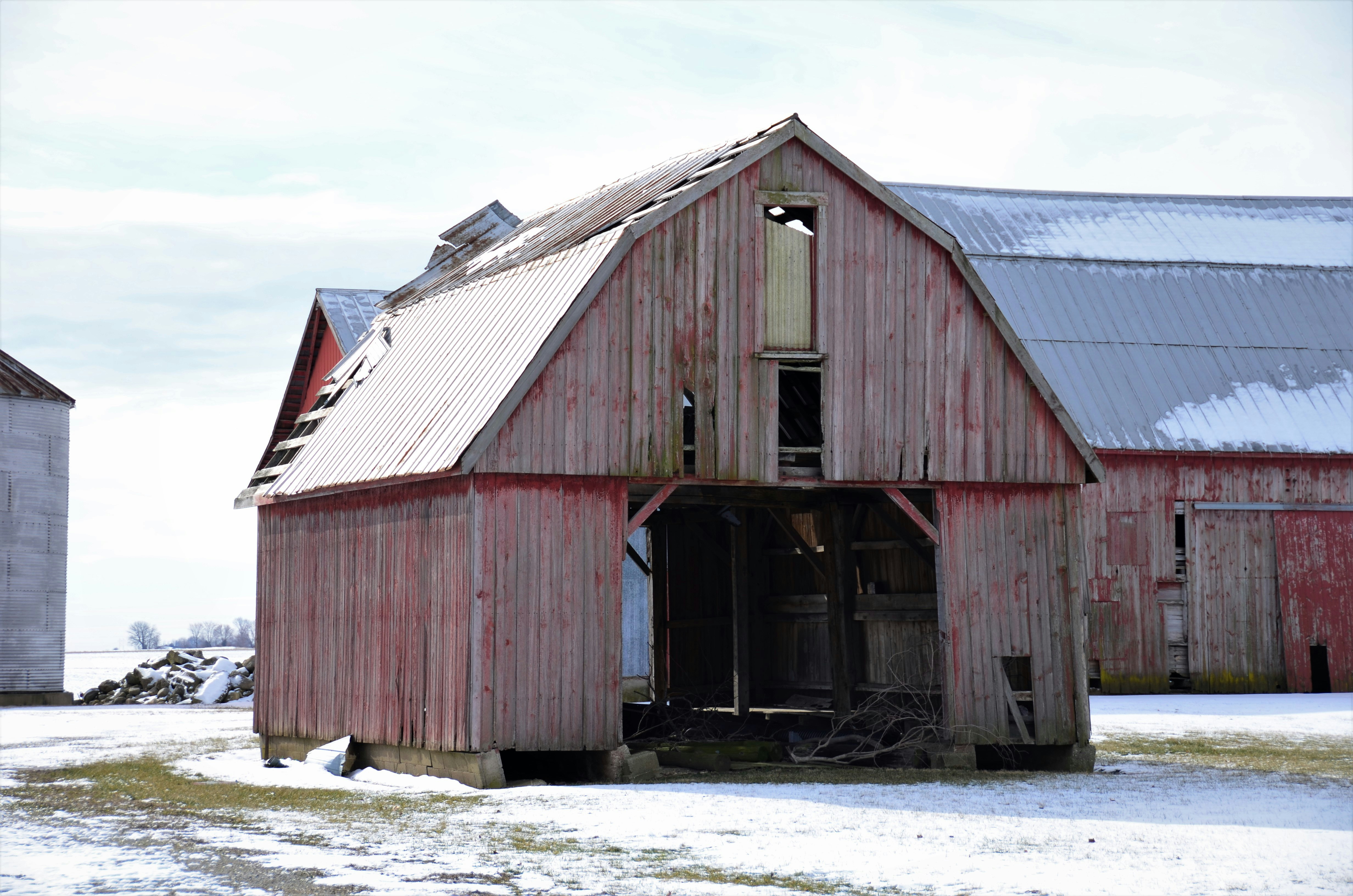
Metal roofing systems can withstand wind speeds up to 140 miles per hour and achieve Class 4 impact resistance. That weather resistance comes from the ability to absorb stress without failing when conditions change quickly.
The same principle applies to building a business that can handle economic swings.
Stable operational systems help maintain performance when markets fluctuate or demand changes. This might involve maintaining consistent processes for customer engagement, ensuring financial buffers are in place, or using tools that continue functioning effectively as volume grows.
When these elements are designed to handle variability rather than operate only under ideal conditions, your business is less likely to require disruptive adjustments during downturns.
From a stewardship perspective, choosing durability over repeated short-term fixes honors the responsibility to manage what has been entrusted to you in a way that creates lasting value rather than ongoing waste.
The Investment That Serves Multiple Generations

Before you make your next major infrastructure decision, ask yourself one question:
Will this choice require you to come back and rebuild around it in the near future, or will it continue supporting your business as it grows without constant intervention?
Durable infrastructure that can scale with demand helps reduce the likelihood of repeated upgrades or disruptions. Asking whether the investment will still function effectively as your business reaches the next stage clarifies whether it's a temporary fix or a foundation that supports long-term stability.
This matters even if you plan to pivot, sell, or scale within 3-5 years.
Investing in durable infrastructure makes your business more attractive and easier to transition because it signals stability to buyers, partners, or investors. Reliable operational systems support consistent performance and reduce the need for immediate upgrades after a handoff.
This simplifies due diligence, improves confidence in projected outcomes, and potentially strengthens valuation by showing that your organization is built to operate without major reconfiguration.
The Mindset Shift That Protects Your Momentum
Stop evaluating decisions based solely on how quickly they solve today's problem.
Start asking how reliably they will perform under tomorrow's pressure.
Metal roofing works not just because it lasts longer, but because it reduces the need for repeated fixes when conditions change. Applying that same principle to business choices means favoring systems, tools, or processes that can support growth and variability without constant adjustment.
This approach helps protect time, capital, and momentum so that progress is not interrupted by avoidable rebuilds or replacements as your venture evolves.
The business maze keeps entrepreneurs stuck in a cycle of temporary fixes and recurring interventions. The REVREV Matrix helps you escape that pattern by building infrastructure that continues performing as you scale.
Your next infrastructure decision is a timing choice about when you want to pay for stability. Choose wisely.
